
PEPPER CAKES – THE MOST POPULAR STREET FOOD IN TAIWAN
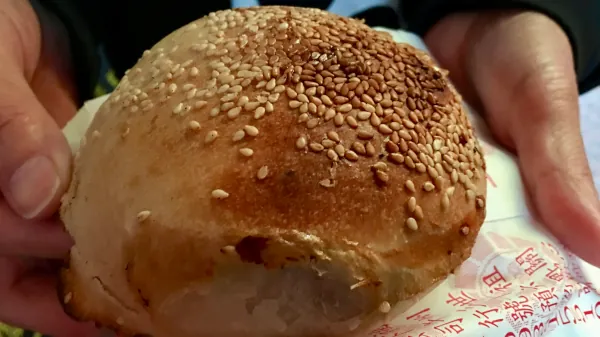
Pepper cakes, known as hujiao bing, have become a beloved street food in Taiwan. The perfect grab-and-go street food as each one comes individually wrapped in its own pouch. These savory pastries feature a flaky crust encasing a juicy, peppery meat filling. Originating from Fuzhou in China’s Fujian province, pepper cakes were introduced to Taiwan by immigrants. Over time, they evolved into a unique Taiwanese delicacy.
Historical Background
The exact origins of pepper cakes remain uncertain. However, it is believed that immigrants from Fuzhou brought the recipe to Taiwan. In Fuzhou, the cakes were simpler, featuring a basic pork filling. Upon their introduction to Taiwan, vendors began adding more black pepper to cater to local tastes, leading to the spicy version popular today.
Ingredients and Preparation

The outer shell of the pepper cake is crafted from a dough comprising flour, water, and a leavening agent like yeast or baking powder. To achieve a flaky texture, lard, butter, or oil is often incorporated. The dough is rolled into thin circles, similar to dumpling wrappers. The filling typically consists of ground pork marinated with black pepper, soy sauce, sugar, and cooking wine. Some variations include five-spice powder or curry powder for added depth.
A generous amount of chopped green onions is placed atop the meat before sealing the cake. Notably, the green onions are added separately to ensure a distinct flavor. The cakes are sealed with the seam side down, brushed with water, and generously sprinkled with white sesame seeds.
Cooking Method

Traditionally, pepper cakes are baked in a cylindrical, high-heat clay oven, akin to a tandoor. Charcoal heats the oven, and the buns are adhered to its inner walls. Once baked to a golden brown, they are scraped off the side of the oven using a flat spatula and caught with a skimmer to prevent them from falling into the charcoal pit. This method imparts a crispy exterior while keeping the interior juicy. To keep them warm, the pepper cakes are placed on a ledge around the opening of the oven.
Variations
While the traditional filling is pork, some vendors offer beef or thinly sliced versions to cater to diverse palates. The addition of green onions is a uniquely Taiwanese twist, highlighting the island’s abundant and flavorful produce. This incorporation of local ingredients has further endeared pepper cakes to both locals and visitors.
Where to Enjoy these Savory Cakes in Taipei

The traditional pepper cakes can be savoured at many locations throughout Taipei, but here are some of the more popular locations:
- Fuyuan Pepper Cake, 42-19 Huayin Street, Datong District
- Fuzhou Ancestral Pepper Cake, corner of Hankou Street and Chongqing S Road, Zhongzheng District
- 124 Wanda Road, Wanhua District
- near 181 Jihe Road, Shilin District
- near Dalong Street and Jiuquan Street, Datong District
- near 602 Zhongxiao E Road and Zhongnan Street, Nangang District
- near 8, Lane 38, Tonghua Street, Da’an District
- near 98-1 Yitong Street, Zhongshan District
- near 5, Alley 2, Lane 89, Section 3, Heping W Road, Wanhua District
- Shilin Night Market
- Raohe Night Market
Worldwide Popularity
Pepper cakes gained international attention after being featured on various travel programs. They have since become a must-try item for tourists visiting Taiwan. Vendors often experience long lines, especially during peak hours, with waits averaging 30 minutes. Many customers purchase multiple cakes due to the extended wait times. Once a vendor sells out, they typically close for the day.
Pepper cakes stand as a testament to Taiwan’s rich culinary heritage. Their evolution from a simple Fuzhou snack to a Taiwanese street food staple underscores the dynamic nature of food culture. Whether enjoyed from a bustling night market stall or homemade, pepper cakes offer a delightful blend of flavors and textures that continue to captivate food enthusiasts worldwide.